Most real estate agents do not need a website to show listings. The MLS, Zillow, and your brokerage already do that, and they do it with more data than you will ever load by hand.
What you need a website for is the part those platforms deliberately will not do: convince someone that you specifically are the agent they should call.
The listing portals are not your competition
This trips up a lot of agents. You are not going to outrank Zillow for a property address, and you should stop trying.
What you can own is everything Zillow has no interest in. The neighborhood you actually know. What the school rezoning did to prices on one side of a street. Whether the HOA in that development is reasonable. The specific questions a first-time buyer in your market asks you every single week.
That content ranks, because nobody with a national database is going to write it.
Your face and your name are the product
Real estate is a referral business wearing a marketing costume. Somebody gets your name from a friend, then looks you up before they call.
That lookup is the entire job of your website. It should load instantly, show a real photograph of you, say which areas you work, and make your phone number impossible to miss. If someone has to hunt for how to contact you, you have lost to the agent whose number was in the header.
Neighborhood pages are the whole strategy
If you take one thing from this page, take this. Build a page for each neighborhood or town you actually serve, and write it like a person who lives there.
Not a paragraph of filler with the town name dropped in six times. Real specifics: price ranges, what kind of housing stock, commute times, who tends to buy there and why. Someone searching for that area finds a page that proves you know it.
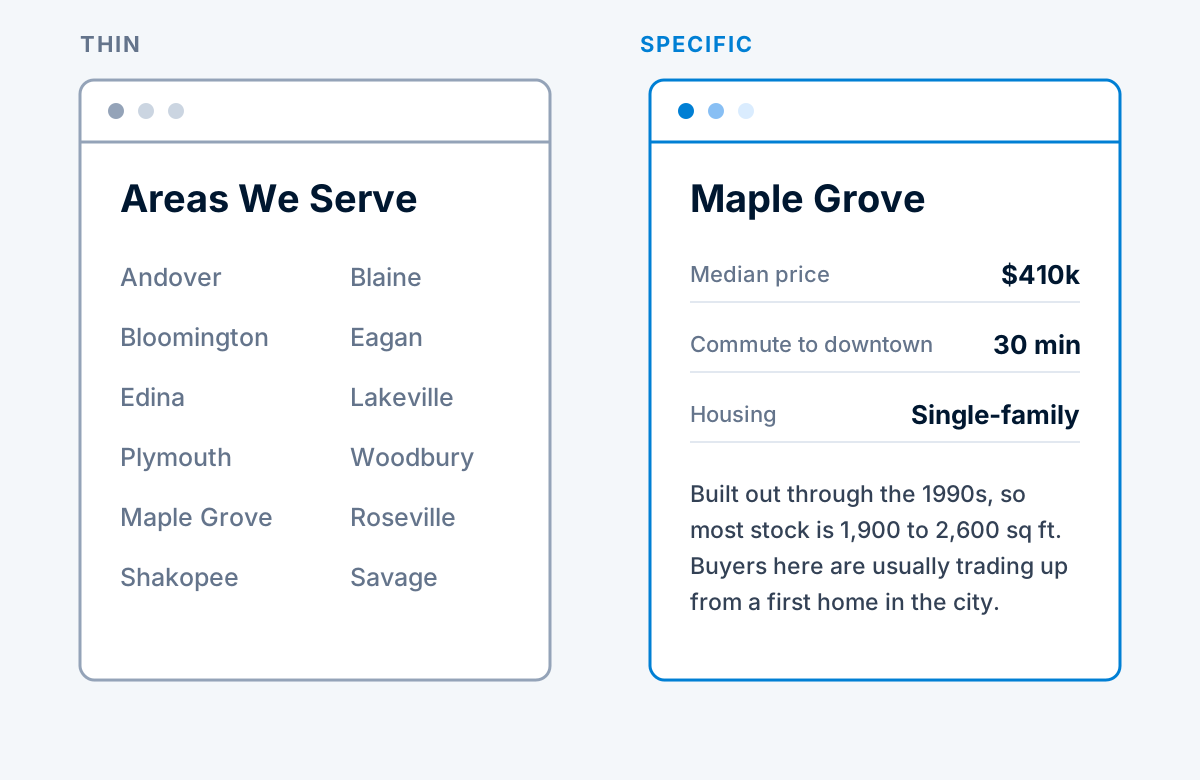
Ten of these beats one page that lists thirty towns you have never sold in.
Speed matters more than the photo carousel
Property photos are heavy, and heavy pages lose people on cellular connections, which is where most casual browsing happens.
Swiftrics publishes your site as static HTML on a global CDN, and images get resized automatically into the right dimensions for whatever device asks for them. You upload the full resolution photo once. A phone downloads a small version, a desktop gets the large one, and you do not think about it again.
What you can skip
An IDX feed, usually. Agents get sold on embedding full MLS search into their site, and it is expensive, slow, and a worse version of what buyers already use elsewhere.
If you want listings on your site, feature the handful that are yours, with your own photos and your own writeup. That is something the portals cannot copy.
Common questions
Does my brokerage let me have my own site?
Most do, with rules about branding and disclosures. Check your agreement before you build. The rules are usually about logo placement and required license text, both easy to satisfy.
Can I put my listings on it?
Yes, as regular pages. Full MLS integration is a different product and generally not worth it for an individual agent.
What about lead capture?
A contact form comes with the site, and submissions land somewhere you can read them. You can connect whatever CRM you already use.
How long does this take to set up?
An afternoon for the core pages. The neighborhood pages are the ongoing part, and they are the part that pays.
Build the pages Zillow will never write
Fourteen day free trial. Your plan isn't charged until it ends.