Photography has a specific SEO problem that most industries do not: the thing you sell is the thing that makes your site slow, and search engines cannot see any of it.
A page of beautiful images is, to a crawler, a page with almost no content. Solve that and you are most of the way there.
Your images are the problem and the opportunity
Three things matter, in this order.
File size. A gallery of camera-original JPEGs will take several seconds to load on a phone, and most people will not wait. You do not need to think about this manually on a modern platform: Swiftrics converts uploads to modern formats and serves a size matched to the device, so a phone downloads a small file and a desktop the large one. Upload the best original you have and leave it alone.
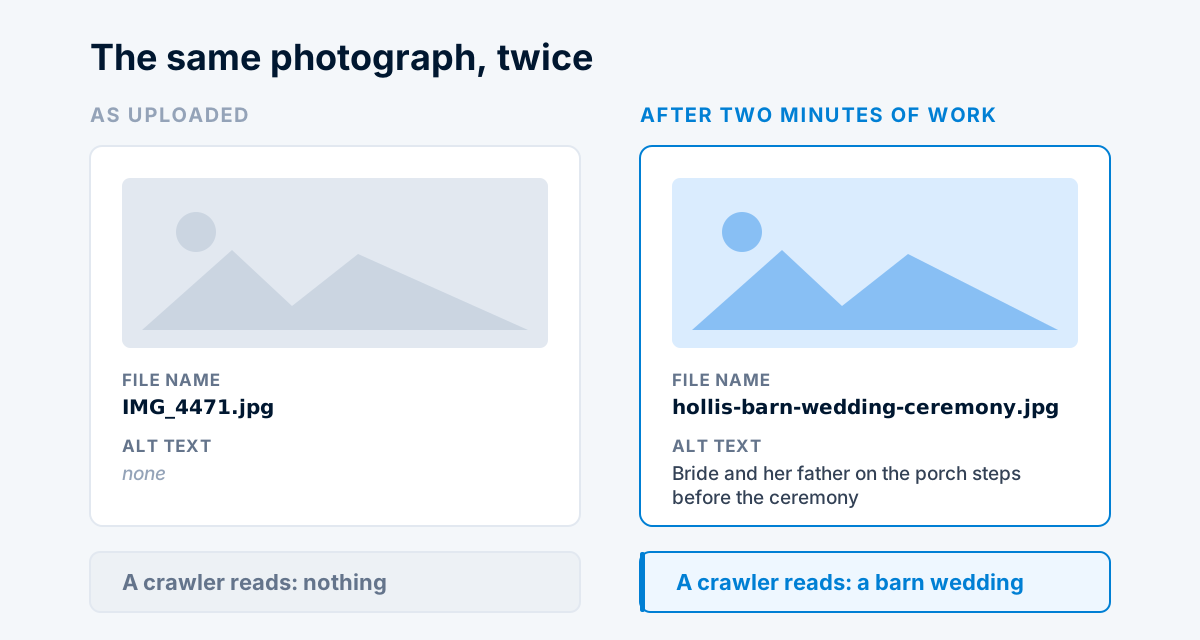
File names. IMG_4471.jpg tells a search engine nothing. hollis-barn-wedding-ceremony.jpg tells it what the picture is of. On Swiftrics, the resized copies your site publishes take their file names from the alt text you write, so good alt text does both jobs.
Alt text. Describe what is in the frame, plainly, for somebody who cannot see it. "Bride and her father on the porch steps before the ceremony" is right. Keyword-stuffing it is both useless and unkind to the people alt text exists for.
Say what you photograph, in words
The most common gap on photographer sites is that they show the work and never name it.
If you shoot weddings, elopements and engagement sessions, those three phrases should appear in your text, not only in your pictures. Somebody searching for an elopement photographer needs a page with the word elopement on it.
This feels redundant when your portfolio makes it obvious. It is not obvious to the machine deciding whether to show you.
Where you work matters more than what you charge
Photography search is overwhelmingly local and overwhelmingly specific: a service plus a place. Wedding photographer plus a city. Newborn photographer plus a suburb.
So name the places. Not a list of thirty towns, which reads as spam, but the cities and venues you genuinely work in, in the words people use for them.
Venues are the underused version of this. If you have shot at a venue more than once, a page about photographing there, with images from real sessions and something useful about the light and the timeline, will get found by every couple booking that venue. There is very little competition for those searches, because it takes actual experience to write the page.
Blog the sessions, but properly
A gallery post with twenty images and no words does nothing for you. The same post with three or four paragraphs does a lot.
Name the venue, the season, roughly what the day involved, and something you would tell a couple planning something similar. That is not filler, it is the thing prospective clients are actually reading for, and it happens to be exactly what makes the page findable.
One session post a month, written properly, will outperform a portfolio that changes silently.
Your Google Business Profile
Free, and it does a lot of work for a local service business. Fill it in completely, add recent photos you took, and keep the service area accurate.
For the wider version of this, see local SEO for small business. Almost all of it applies.
Prices, and the argument about them
Photographers argue about publishing prices more than most trades. The case for is the same as everywhere else: people will not enquire without a rough idea, and they will not call to ask.
A starting figure with an honest caveat is enough. "Wedding coverage starts at $2,800 for eight hours" filters out the people who were never going to book you and reassures everyone else. It also gets found, which a price behind a contact form never will.
What not to bother with
Watermarks across the middle of your images. They do not stop theft, they make your best work look worse, and they hurt the impression the page makes.
Flash-style galleries and anything that loads its images through scripts. If a crawler cannot see the page without executing code, treat that as a page that does not exist.
Chasing "photographer near me". You cannot target it directly and you do not need to. Naming your city and your venues is how you end up in those results anyway.
The short version
Write real alt text, put the words for what you shoot on the page, name the places you work, and write a few paragraphs with each session.
That is a full photography SEO strategy, and none of it requires you to learn anything technical.