Restaurant search is unlike almost any other kind. The person searching is nearby, deciding now, and will act within the hour. They are not researching. They are choosing.
That changes what matters. Most general SEO advice is about building authority over months. Restaurant SEO is about being unmistakably present at the moment somebody is standing on a sidewalk deciding between you and two other places.
Your Google Business Profile outranks your website
Start here, because for a restaurant this is worth more than everything else combined.
Most people never reach your website. They see the map result, the star rating, the photos, and the hours, and they decide from there. That panel is your Google Business Profile, it is free, and it is the highest-leverage thing you own online.
Fill in every field. Real hours including holidays. The correct category, and the secondary categories that fit. Photos you took, not the ones customers uploaded of the parking lot. Your menu link. Attributes like outdoor seating, takeout, and accessibility, which people filter on more than restaurant owners realize.
Then keep it current. A profile with hours that were right last spring is worse than one that admits it is closed on Mondays.
Your menu has to be text
The single most common technical mistake in the industry, and the one that costs the most.
A PDF menu hides every dish you serve from search. So does a menu saved as an image or built into a background graphic. If somebody searches for a specific dish plus your town, and that dish only exists inside a PDF on your site, you cannot be the answer.
Write the menu as an ordinary web page. Dish names, descriptions, and prices as real text. This is also what makes the menu readable on a phone without pinching, which is the other half of why it matters. We go into this further on our page about restaurant websites.
Name your neighborhood, honestly
People search for food by area. Not by city, usually, but by neighborhood or by "near" a landmark.
So the page should say where you actually are, in the words locals use. If you are in a district people call something specific, use that name. Mention the streets you are between and what you are near.
What does not work is listing fifteen neighborhoods you would like to draw from. That reads as spam to a search engine and to a person, and it has read that way for about a decade.
Reviews are the ranking factor you cannot fake
Volume, recency, and rating all matter for local ranking, and there is no legitimate shortcut.
What works is asking, at the moment somebody says they enjoyed it. Not a card on the table that nobody picks up, but a server or an owner asking directly. Restaurants that do this consistently pull ahead of ones that do not within a couple of months.
Reply to reviews, especially the bad ones, and reply like a person rather than a corporate communications department. Prospective customers read the replies more carefully than the reviews.
Speed, because of where people are standing
Restaurant traffic comes from phones on cellular connections, frequently downtown where signal is congested, from somebody with very little patience.
A slow site loses them before it says anything. This is one of the few businesses where load time converts directly into people walking through a door, which is why we build Swiftrics sites as static HTML on a CDN rather than as a database query that has to be assembled on request.
What to write, if you write anything
Most restaurants do not need a blog. If you are going to write, write the things people search for that you can answer better than anyone.
Your own dishes and what is in them. The regional style you cook, explained. Private events and what they cost. Parking, which people search for far more than restaurant owners expect. What you do for dietary restrictions.
Four pages that answer real questions beat forty posts about seasonal ingredients.
The order to do this in
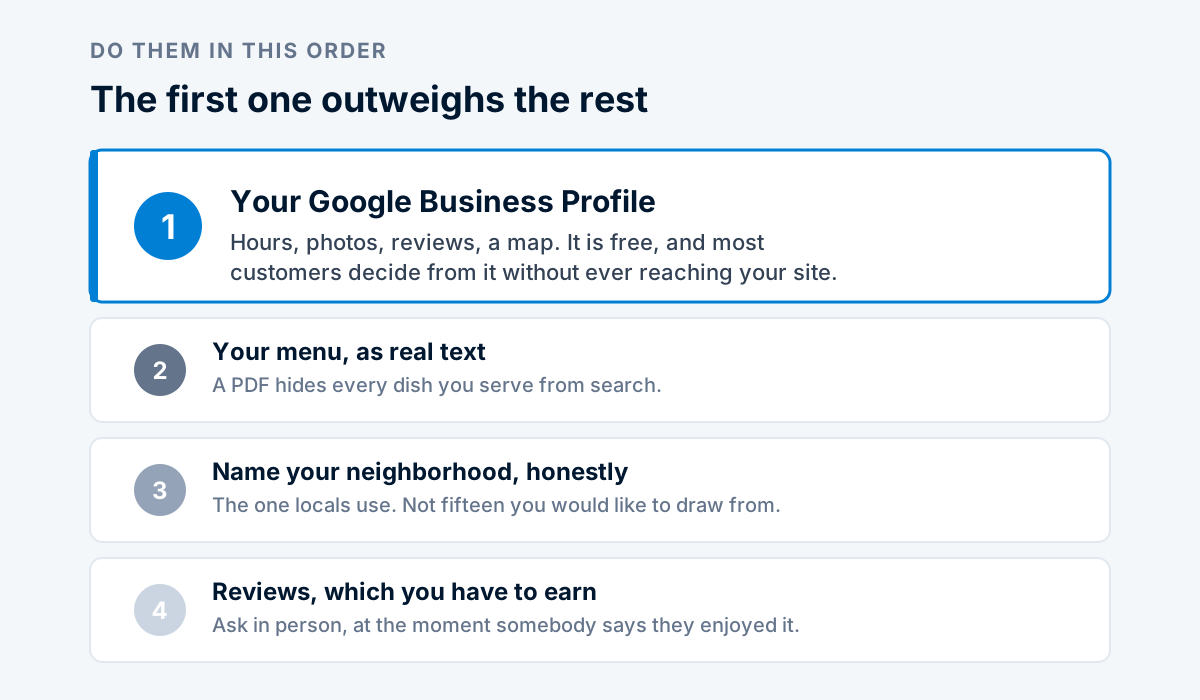
Google Business Profile first, completely, this week. Menu as text second. Neighborhood and location details third. Reviews as an ongoing habit rather than a project.
If you only do the first two, you will be ahead of most restaurants in your town.