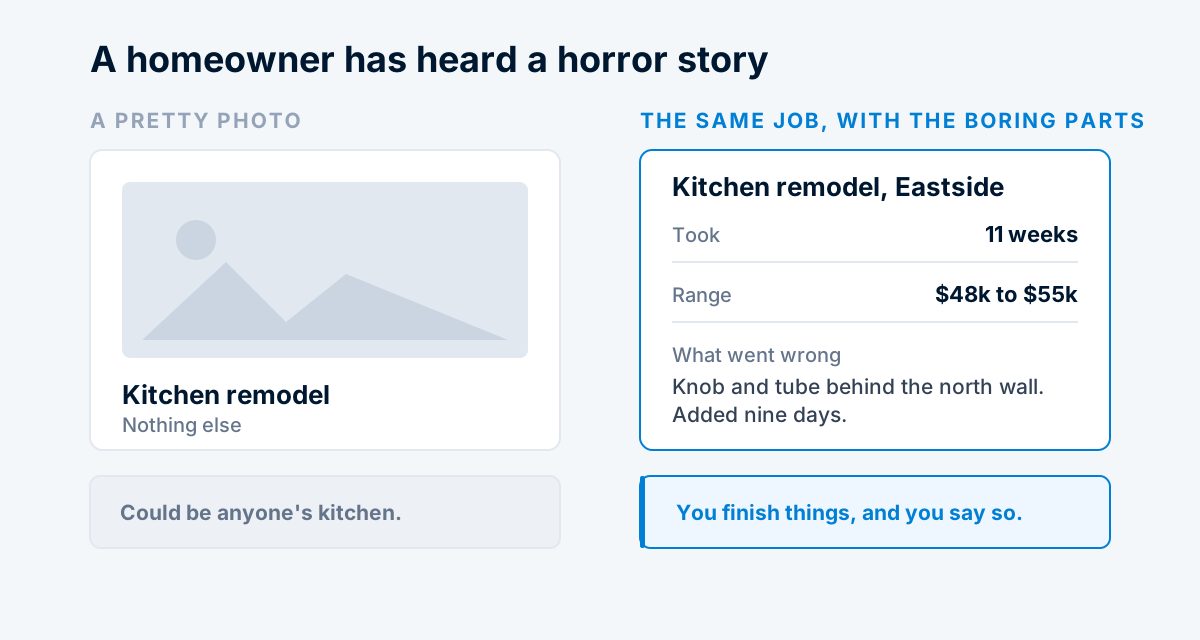
Nearly everyone hiring a remodeler has heard a horror story. A neighbor whose kitchen sat unfinished for five months. A cousin who paid a deposit to somebody who stopped answering.
That story is in the room before you are. Your website's job is to make somebody feel safe enough to have you in their house.
Finished work, with the boring details attached
Photographs of completed jobs are the whole portfolio, and most contractor sites do this halfway: a gallery of pretty rooms with no context.
Attach the details. What the job was, roughly what it cost or what range it fell in, how long it took, and what was difficult about it. A kitchen with "eleven weeks, and we found knob and tube behind the north wall, which added nine days" is worth ten anonymous pretty photos. It says you finish things and you tell people the truth when a job goes sideways.
Before and after pairs work better than after alone. People want to see that you handled something ugly.
Put your license and insurance on the page
Your license number, the states or counties you are licensed in, and confirmation that you carry liability insurance and workers' comp.
This is dull, and it is one of the highest-converting things on a contractor website, because it is exactly what a cautious homeowner is trying to establish and usually cannot. Many states also require the license number on advertising, so check your own rules.
Name your service area
Write out the towns and counties you actually work in. Not "the greater metro area."
Half the calls a contractor fields are from outside their radius, and every one of those wastes both people's time. Naming the towns filters them and gets you found by people searching for your trade plus their town, which is how this work is searched for.
A page per town beats one page listing all of them, which is the single biggest unclaimed opportunity in local search. The trades and real estate agents run the same play, and both are worth a look because the shape is identical even when the work is not.
Say how you handle money
Deposit structure, payment schedule, and what happens if the scope changes mid-job.
Contractors tend to treat this as a conversation for later. Putting it on the site plainly is unusual enough that it becomes the reason someone calls you instead of the two other bids. It also filters out people who were never going to be comfortable with how you work.
What you can skip
An instant quote calculator. Homeowners know a real number requires seeing the space, and a calculator that produces a fake one damages trust rather than building it. A clear "here is how we scope and what a site visit involves" page does the same job honestly.
Common questions
Can I update the portfolio myself?
Yes, and this is most of the value. A portfolio that stops in 2023 reads as a business that stopped. Adding a finished job takes a few minutes.
Do I need a separate page per service?
If you do meaningfully different work, yes. Kitchens, baths, additions, and decks are separate searches, and one combined services page competes for none of them. That is the same argument as giving each service its own page rather than one long list.
What about reviews?
Link to wherever they already live rather than retyping them. People trust a review platform more than a testimonial on your own site, and it is less work for you.
Do I need a contact form or is a phone number enough?
Both. Some people will not call a stranger, and some will not fill in a form. A form comes with the site.
Can I keep my domain?
Yes. Point it at Swiftrics and it keeps working.
Show the work, and the details behind it
Fourteen day free trial. Your plan isn't charged until it ends.