Nonprofit websites fail in a particular way. A board member's nephew builds it for free in 2019, it is genuinely fine, and then he graduates. Four years later nobody can update the staff list, the grant deadline on the homepage has passed, and the only person with the login has left the organization.
The technology is rarely the problem. Continuity is. Churches lose their sites the same way, usually to a volunteer moving away rather than graduating, and if you are building one of those specifically we wrote the step-by-step separately.
Three audiences, one site
A small nonprofit site is doing three unrelated jobs at once, and most of them do all three badly by trying to do them equally.
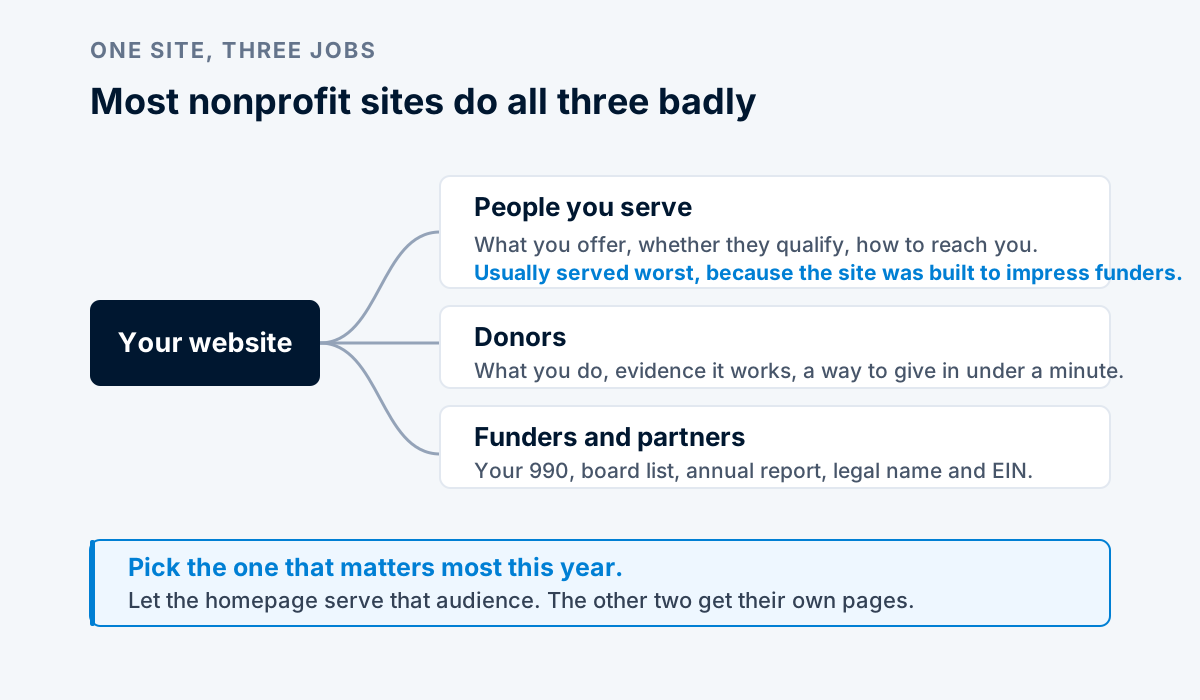
The group most often served worst is the first one, usually because the site was designed to impress funders. The people you exist to help arrive looking for a plain answer about whether they qualify and how to reach you, and find a photograph and a mission statement.
Decide which of the three matters most this year and let the homepage serve that one. The other two get their own pages.
Say what you do in one sentence
Not your mission statement. Mission statements are written by committees and read like it.
Write the sentence you would say to somebody at a bus stop. "We give hot meals to people sleeping rough in the county, seven nights a week." Then put that at the top of the homepage. Almost every nonprofit site buries this under a photograph and a word like "empowering."
Evidence beats adjectives
One real number does more than a paragraph of warm language. Meals served last year. Families housed. Hours of tutoring delivered.
If you have an outcome you can state honestly, state it. If you do not have one yet, say what you are doing instead and skip the adjectives. Donors have read a great deal of hopeful writing and are not moved by more of it.
Getting found
Nonprofit SEO is unusually winnable because so few organizations bother. The searches that matter are specific and local: your service plus your county, "free" plus the thing you provide, and the eligibility questions people ask before they reach out.
A page answering "who qualifies for this" in plain words will find people who need you and will rank, because your competition for that phrase is mostly government PDFs. The same principles apply as anywhere else local, which we covered in local SEO for small business.
Cost
Nineteen dollars a month, including your domain, hosting and SSL. That is a line item you can defend to a board.
Worth saying plainly: if you qualify for the Google Ad Grant, that is worth more to you than anything about your website platform, and it is free. Do that first.
Common questions
Can several people have access?
Yes, and set it up that way immediately. This is the single most important thing you can do for continuity, and it costs nothing.
Can we take donations through the site?
Link out to whatever platform you already use. Rebuilding donation processing is not worth it, and your existing provider already handles receipting and compliance.
Do we need a blog?
Only if somebody will actually write it. An abandoned blog whose last post is from two years ago reads worse than no blog. Two posts a year, kept current, beats twelve then silence.
We are a tiny all-volunteer group. Is this overkill?
Possibly. If nobody has an hour a month to keep it current, a single well-written page with your contact details will serve you better than a site nobody maintains.
Build something the next director can still edit
Fourteen day free trial. Your plan isn't charged until it ends.